October 2026 · A small group for women
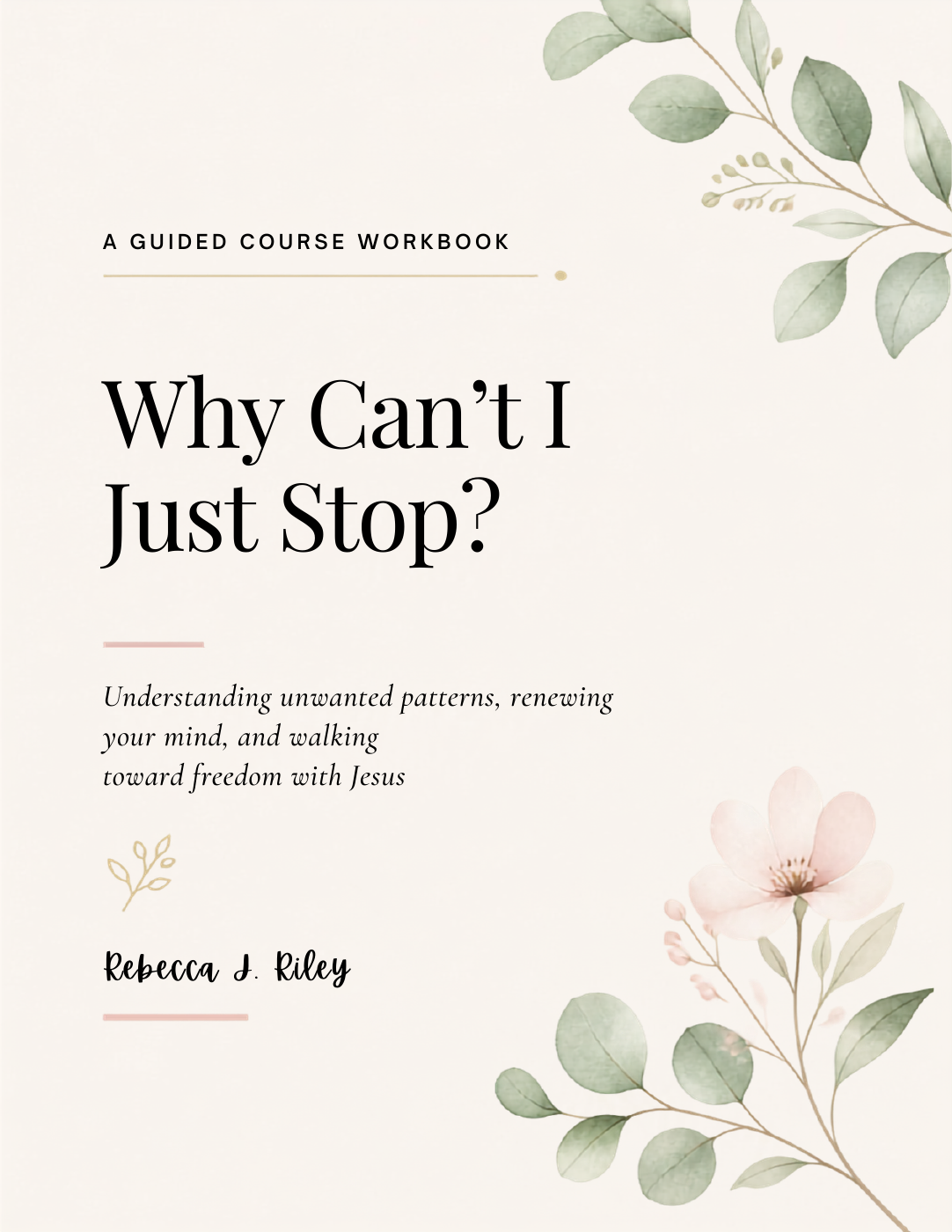
Why Can’t I
Just Stop?
You don’t have to hide until you’ve fixed yourself.
For the woman who loves Jesus and keeps reaching for something she genuinely wants to stop. Sexual struggles, yes. But also food, alcohol, scrolling, spending, relationships, avoidance, and the ways we escape.
Let’s spend four weeks understanding the pattern, practicing a different response, and bringing Jesus into the places we’ve been afraid to let Him see.
I Want to Join the October CohortEnrollment closes October 2, 2026

I’ve lived versions of this, too.”
Four WednesdaysOctober 7, 14, 21 & 28
10–11:30 a.m. CentralLive on Zoom · Teaching replays
Women 18+Up to 15 women · Sharing is optional
Is this for me?
“I mean it when I say
I want to stop.”
Maybe you’ve prayed about it. Promised yourself you were done. Deleted the app, made a rule, started over on Monday. And then found yourself back in the same place.
Maybe you’re thinking, “If I were really a Christian, I wouldn’t still struggle with this.” “Why hasn’t God taken this away?” “What’s wrong with me?” “I can’t let anyone know.”
Friend, this is the kind of conversation I want us to be able to have.
Your “this” might be…
- Porn or masturbation
- Sexual fantasy or lust
- Food
- Alcohol or other substances
- Shopping or spending
- Scrolling or social media
- Unhealthy relationships or seeking attention
- Avoidance or escapism
- Another pattern you keep returning to
This is not exclusively a sexual-struggles group. These behaviors aren’t identical. They can have different causes, consequences, risks, and support needs. What brings us together is that question: Why do I keep reaching for this when I want to stop?
Sexual struggles will likely be a significant part of our conversations. They’re part of my story, and they’re what many women have reached out to me about. If that’s you, you are welcome. If it isn’t, there is room for you here, too.
The question underneath the question
What is it
doing for you?
“We can name the purpose a behavior served without calling the behavior harmless.”From the guided course workbook
This isn’t really just about the thing you can’t stop doing.
For me, porn wasn’t simply a sexual issue. It gave me escape. It gave me a high. It changed how I felt, and I learned that I could go back to it for relief or reward.
“Try harder” didn’t help me understand what I was reaching for—or what to do when I wanted that escape again.
We’ll get curious about your pattern: the emotional drivers, triggers, coping, reward, and learned responses. What happens before you reach for it? What does it promise? What changes for a few minutes? Is there a need, or a “void,” you’re trying to fill?
We won’t assume every pattern comes from trauma or one hidden wound. Your story deserves more care than a one-size-fits-all explanation.
In the workbook, I use the picture of ruts in the grass: a route traveled over and over becomes easier to follow. It’s a picture of learning, not a promise of an instant brain reset. New responses take practice, support, changes around us, and time.
Jesus belongs in the middle
Why are you hiding?
In Genesis 3, Adam and Eve covered themselves and hid. God came looking for them. I keep coming back to that.
Shame can convince us to hide from the very Person we need most. We stop praying honestly. We say, “I’m fine.” We decide we’ll come back to Jesus after we’ve gotten ourselves together.
But you can tell Him the truth now. You can take responsibility without deciding that your struggle is your identity.
We’ll make room for Scripture, honest reflection, prayer, and the Holy Spirit’s work. Jesus isn’t a verse attached to a plan for better behavior. Our relationship with Him is at the center of how we approach the whole thing.
And we’ll talk about the part people don’t always talk about: what happens when the temptation doesn’t disappear—or when you stumble again.
Part of freedom is learning to run toward Jesus, tell the truth, receive help, and take the next faithful step instead of disappearing into shame.
You can bring this into the light
without telling the whole room your story.
Four weeks · Eight workbook modules
What we’ll explore together.
Work through two modules each week, then bring your questions and what you’re noticing to our Zoom gathering. We’ll teach, talk, apply the material, and leave space for prayer.
Week 1 October 7
Start with being seen.
The God Who Sees
Why Couldn’t I Just Stop?Notice the response you expect from God. Begin mapping the cycle and separating responsibility from shame.
Practice: Map one recent cycle without turning it into a verdict on who you are.
Week 2 October 14
Understand the old path.
What Was It Doing for Me?
Ruts in the GrassExplore relief, reward, escape, unmet needs, and the cues that make a familiar response easier to reach for.
Practice: Identify the need beneath an urge and your earliest turn toward the old pattern.
Week 3 October 21
Practice a new response.
Think About What You’re Thinking About
Walk a New PathExamine the thoughts you keep rehearsing. Build practical ways to pause, change your surroundings, and reach for support.
Practice: Create a first-minute plan you can rehearse before a hard moment.
Week 4 October 28
Make room for the hard days.
Bring It Into the Light
Freedom That Can Survive a Hard DayConsider safe support, appropriate privacy, and how to respond to a setback without giving up or hiding.
Practice: Develop your ongoing freedom plan and identify a wise next step.
Something to take into real life
More than “I need
to try harder.”
Four weeks won’t make us finished people. These are concrete things we’ll work toward together.
- 01
Language for your particular pattern
Name what you’re reaching for, what tends to happen beforehand, and the relief, reward, or escape that keeps drawing you back.
- 02
A practical interruption plan
Recognize early warning signs and practice a response that addresses the real need—along with boundaries and support.
- 03
A way back after a setback
Separate temptation and struggle from your identity. Decide what to do next instead of spiraling into “I already ruined everything.”
- 04
More honesty with Jesus—and less isolation
Bring Him the part you’ve been hiding. Have words for something you may have been afraid to name, alongside women who know what it’s like to love Jesus and still struggle.
How the cohort works
A small group.
Room for an actual conversation.
Four live Zoom gatherings
Wednesdays, 10–11:30 a.m. Central
October 7, 14, 21 & 28, 2026
Central Daylight Time · America/Chicago
October 7, 14 & 21: 4–5:30 p.m. BST
October 28: 3–4:30 p.m. GMT
Your clocks change before ours, so the last gathering is an hour earlier for you.
Women ages 18+. Up to 15 participants, with a minimum of 5 for the cohort to run. If we don’t reach five, I’ll notify everyone who registered.
Enrollment deadline: October 2, 2026.
Teaching, discussion & prayer
We’ll use the eight-module workbook to guide our conversations. Sharing personal details is never required, and cameras are optional.
A private home base on Heartbeat
Resources, reminders, community conversation, and teaching replays will be there. No Facebook account needed. I’ll send access and instructions after your place is confirmed.
Catch up without recording anyone’s story
Only teaching and instructional portions are recorded. Recording stops before personal discussion, individual sharing, sensitive questions, and personal prayer.
Ministry with clear limits
This is Christian formation, ministry, and education—not therapy or mental-health treatment. The community isn’t continuously monitored and doesn’t include daily private counsel or crisis support.
The workbook & giving
I don’t want finances
to keep you away.
You need access to the workbook. If you already own it or have it through your paid Substack subscription, you don’t need to buy it again.
You do not have to be a paid subscriber to join.
Give what genuinely feels affordable.
There is no fixed cohort fee. A donation toward participation is strongly encouraged, but optional. Your giving supports the preparation, time, Zoom gatherings, and community platform.
If you can’t give right now, you are still welcome. Donations do not affect acceptance or participation.
Need help getting the workbook? Select “I need help accessing it” on the enrollment form. No explanation needed.
Get the workbook or give through my store. To donate, scroll below the workbook to the donation section.
About Rebecca
I know what
it is to hide.
Rebecca J. Riley
My story includes addiction to alcohol and pornography, an online fetish community, and nearly marrying someone I met there. I know what it is to feel seen in a place that is also keeping you trapped. I’m now more than two years sober from alcohol.
I also know what it is to finally say the thing you were sure you could never tell another human. Telling my counselor felt like swallowing glass. The relief afterward was indescribable. That conversation didn’t finish the work, but I was no longer carrying it alone.
My journey has included counseling, recovery, practical changes, years of learning new responses, and the power and presence of the Holy Spirit. I’m still learning to walk with Jesus in the middle of real life.
I have an M.Ed. in Guidance & Counseling and spent approximately 13 years in education as a teacher and school counselor.
I bring that experience and my own story to this group. I’m here as a Christian writer and ministry leader. This cohort is not a counseling or treatment relationship.
The things you might be wondering
Let’s talk about it.
Is this only for sexual struggles?
No. This group is for women who keep reaching for a behavior they genuinely want to change. That might be porn, but it might also be food, alcohol, spending, scrolling, relationships, or avoidance. Sexual struggles will likely be a significant part of the conversation, but they are not the only reason to come.
What if my struggle IS sexual?
You are welcome here. We’re not going to panic, clutch our pearls, or shame you. I know how lonely this can feel. We can talk honestly about sexual struggles without graphic descriptions or anyone being expected to share intimate details.
Will I have to tell everyone what I’m struggling with?
No. You can participate, listen, reflect, and ask questions without naming your particular behavior. Cameras are optional. Coming into the light doesn’t mean giving everyone access to your story. You get to have appropriate privacy and boundaries.
Is this therapy?
No. This is Christian formation, ministry, and education through a workbook, teaching, discussion, and prayer. I’m not diagnosing conditions or providing individualized mental-health treatment in this group. Some patterns need specialized clinical or recovery support alongside—or instead of—a cohort. Receiving that help is welcome here; it isn’t spiritual failure.
What if I’ve already tried to stop a hundred times?
That’s exactly the kind of woman I had in mind. We’ll look beyond the promise to “never do it again” and examine what keeps happening before, during, and after the pattern. I can’t promise a cure in four weeks. I can offer a place to learn, practice, ask honest questions, and consider your next steps with Jesus.
What if I’m still actively struggling?
You don’t have to “get clean” before you come. You can begin while the struggle is still real. This group doesn’t replace treatment or crisis care, but you do not need a finished testimony to participate.
What if I’m afraid someone will know?
I understand. The group is small, and our Heartbeat community is private. The enrollment form lets you give a safe email address and a first name or alias for Zoom. We ask everyone to protect one another’s stories and respect privacy. Teaching is recorded; personal sharing, sensitive questions, and personal prayer are not.
Other participants will know who is present, and no online group can guarantee absolute confidentiality. This is not legally privileged therapy. Share only what you feel comfortable sharing; you never have to disclose your intimate details.
What happens if I miss a session?
You can catch up with the teaching and instructional recordings in Heartbeat. You won’t see a recording of another woman’s personal discussion or prayer, because those portions are never recorded. You do not have to attend every meeting live; the form also lets you indicate that you expect to use teaching replays only.
Do I have to be a paid Substack subscriber?
No. You can buy the workbook for $12 on its own. Paid subscribers already have access to it. If you need help accessing the workbook, say so on the enrollment form—no explanation required. The cohort donation is encouraged and optional.
What happens after I fill out the form?
I’ll review registrations and follow up by email to confirm places and send next steps, including access to our private Heartbeat community. Buying the workbook or giving a donation alone does not reserve a place. We need five participants to run, with room for up to 15.
Why Can’t I Just Stop? — October 2026 Cohort
You don’t have to hide
until you’ve fixed yourself.
You can bring this into the light now. At your pace. With appropriate boundaries. And with Jesus right in the middle of it.
I’d love to walk through these four weeks with you.
I Want to Join the October CohortRegister by October 2, 2026 · I’ll follow up to confirm your place.
Have a practical question before registering? Email Rebecca.